
October 7, 2026


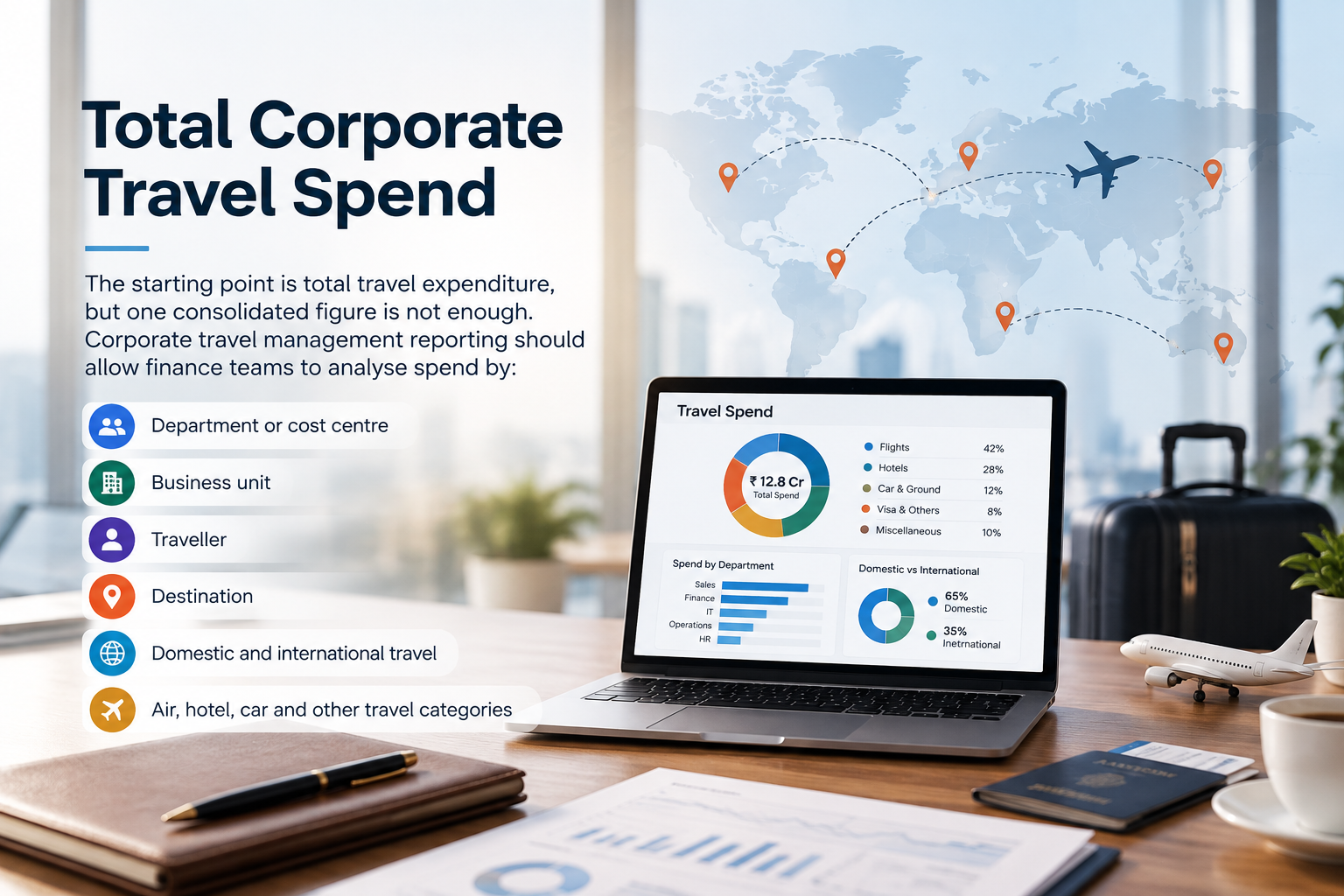 The starting point is total travel expenditure, but one figure is not enough.
Corporate travel management reporting should enable finance teams to analyze spending by:
This allows CFOs to pinpoint the exact areas of increase, rather than simply being aware that overall travel costs have risen.
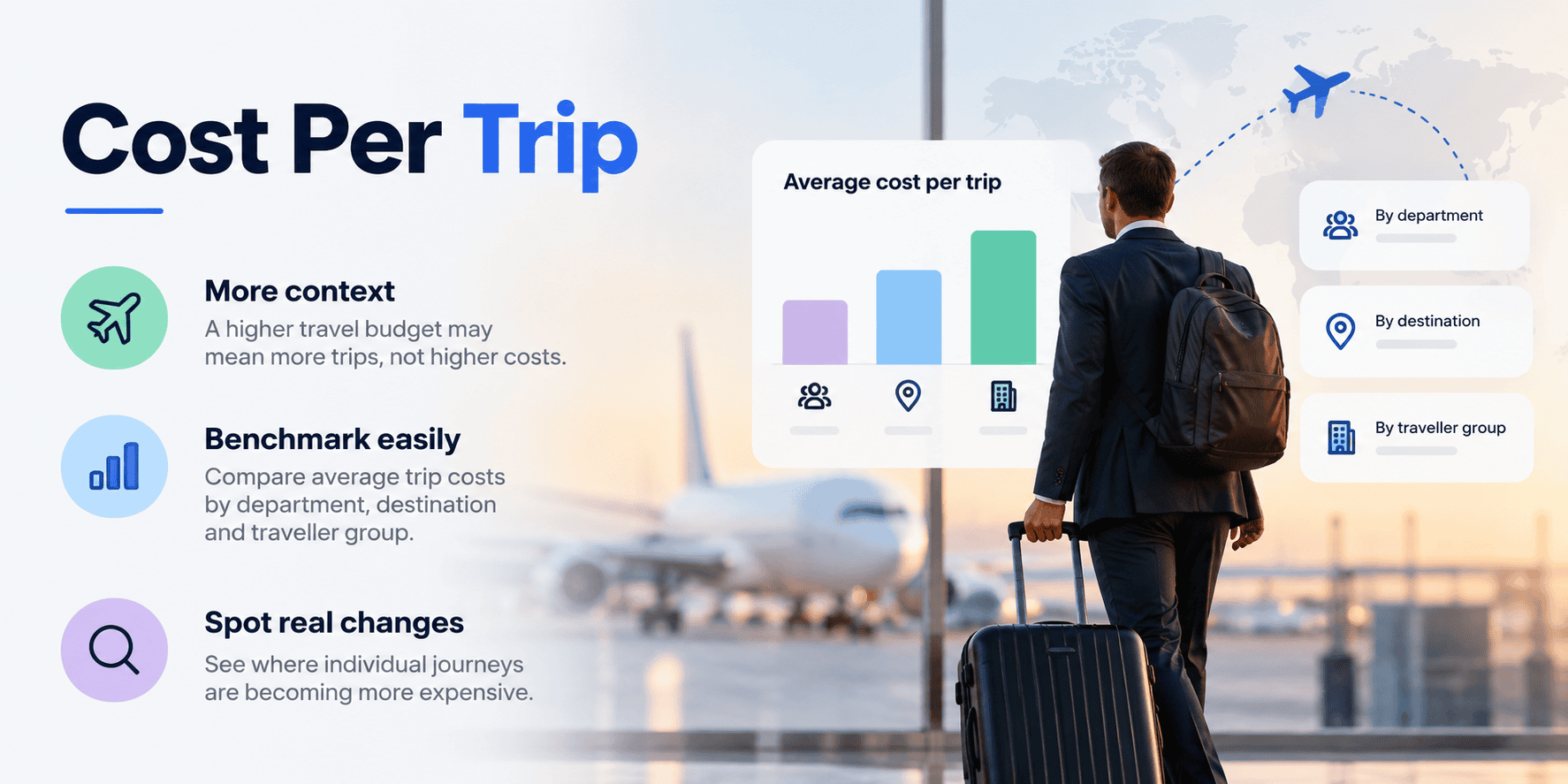 A growing travel budget doesn’t always mean travel is becoming more expensive. It could simply be that employees are flying more.
Tracking cost per trip gives you more context.
Finance teams can benchmark average trip costs by department, destination, and traveller group to understand where individual journeys are becoming more expensive.
This provides a more meaningful comparison of costs than simply looking at total spend.
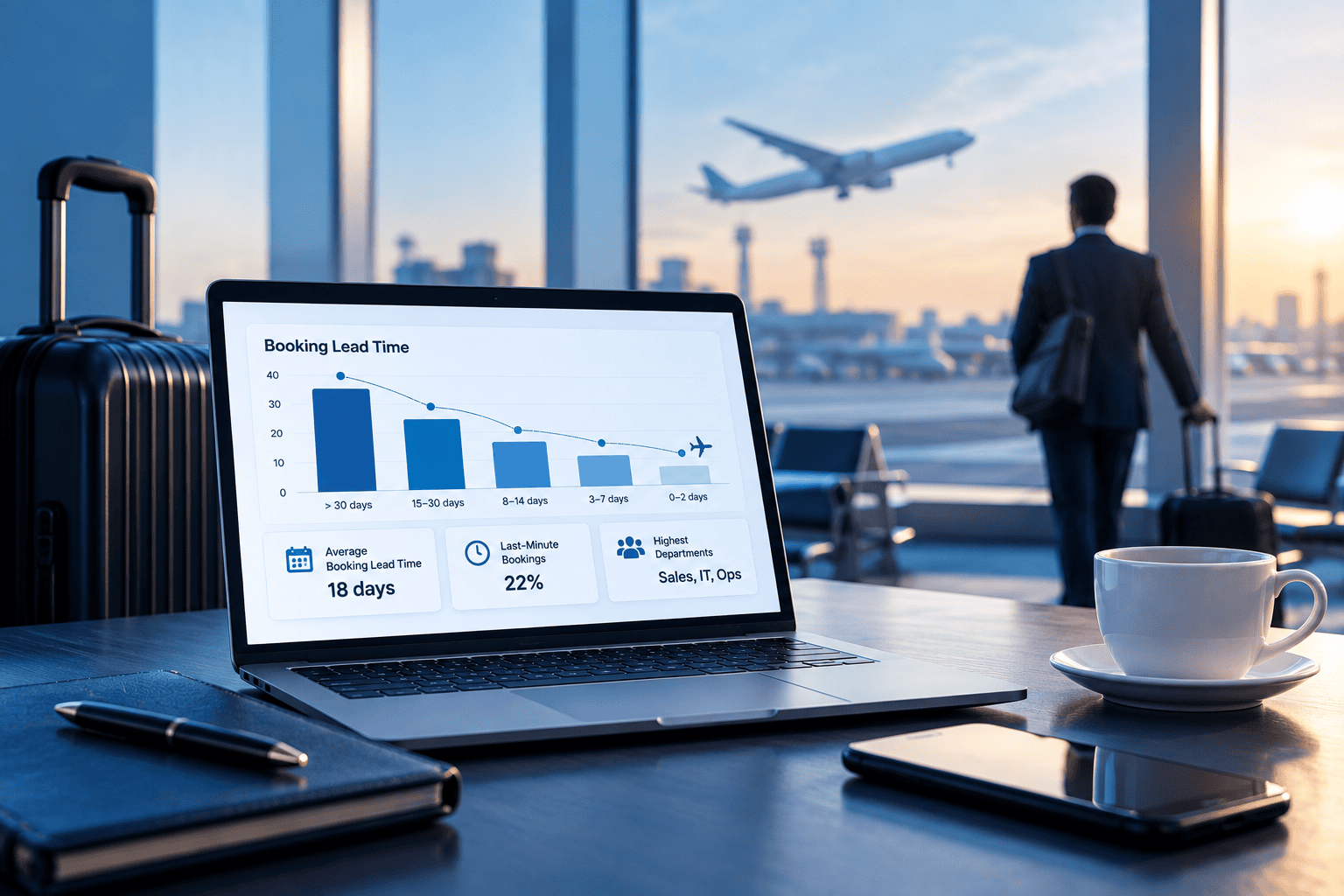
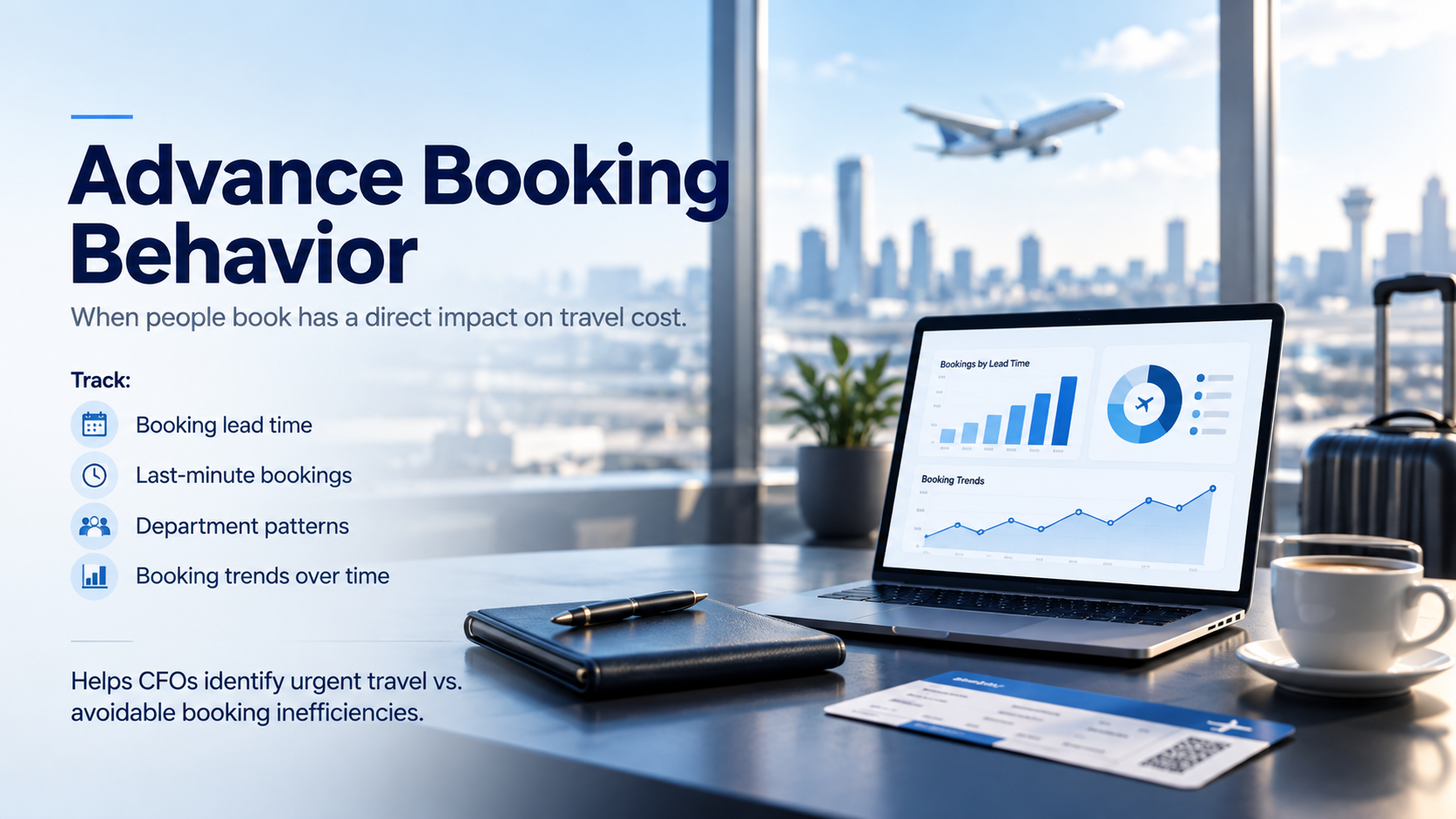 When you book, it can make a big difference to what your trip will cost.
Corporate travel management reporting should therefore include:
This allows CFOs to see if the increased cost is due to necessary urgent travel or booking patterns that can be optimized.
 A corporate travel policy has no value unless employees are consistently adhering to it.
Finance teams should be able to access:
Corporate travel management reporting can help organizations determine whether non-compliance is a function of traveller behavior, approval processes, or even the policy itself.
 Good corporate travel reporting should explain not only what was spent but also where savings opportunities may exist.
This can include:
This insight gives finance and travel teams the ability to make smarter decisions for future bookings, not just review historic spend.
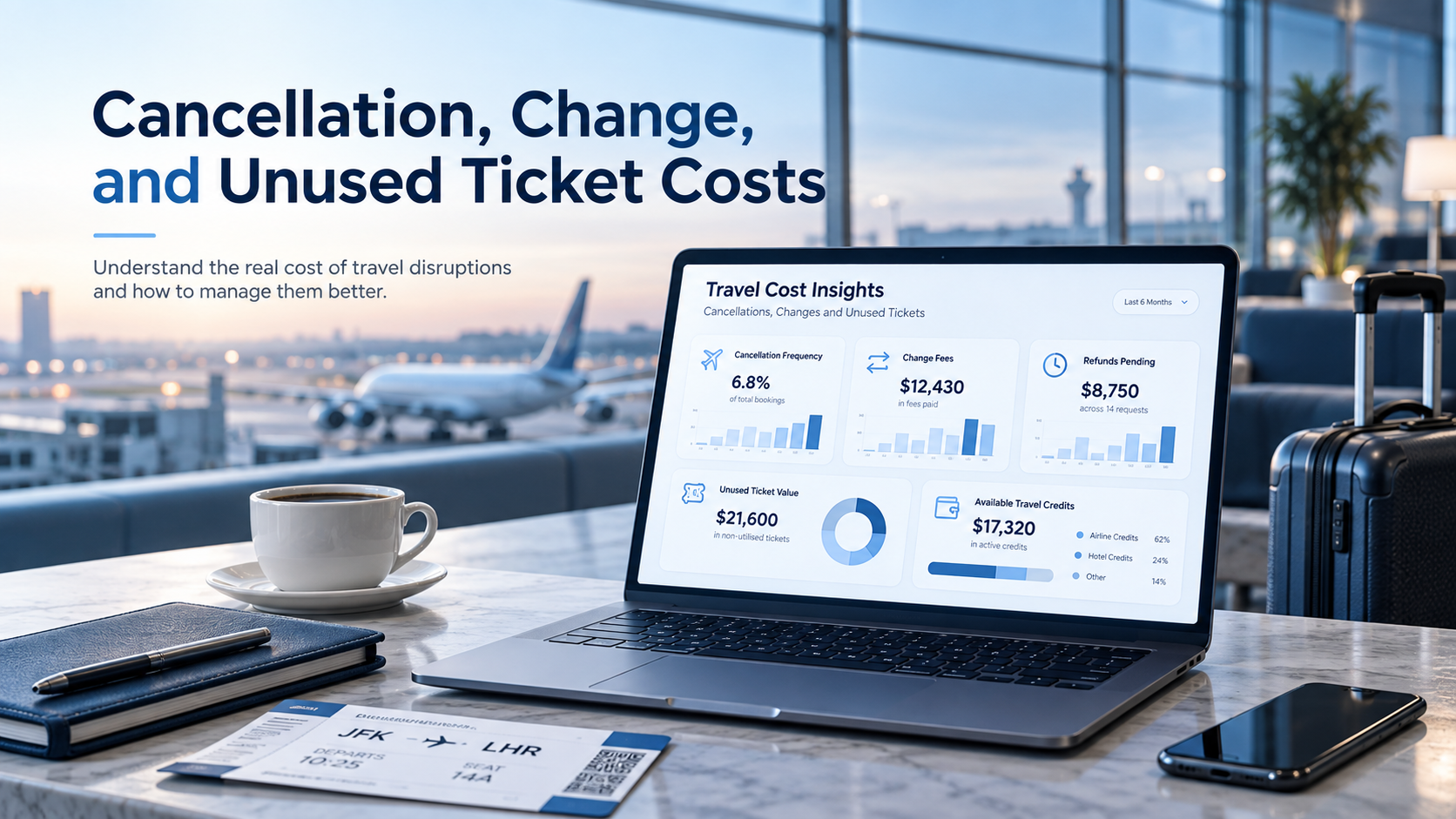 The total cost of a business trip does not always equal the initial value of the booking.
All of these changes, cancellation, no-shows, and unused tickets can increase the real cost of corporate travel.
CFOs should be tracking:
Without consolidated corporate travel management reporting, these costs can easily be lost in the shuffle when spread out over many travellers and suppliers.
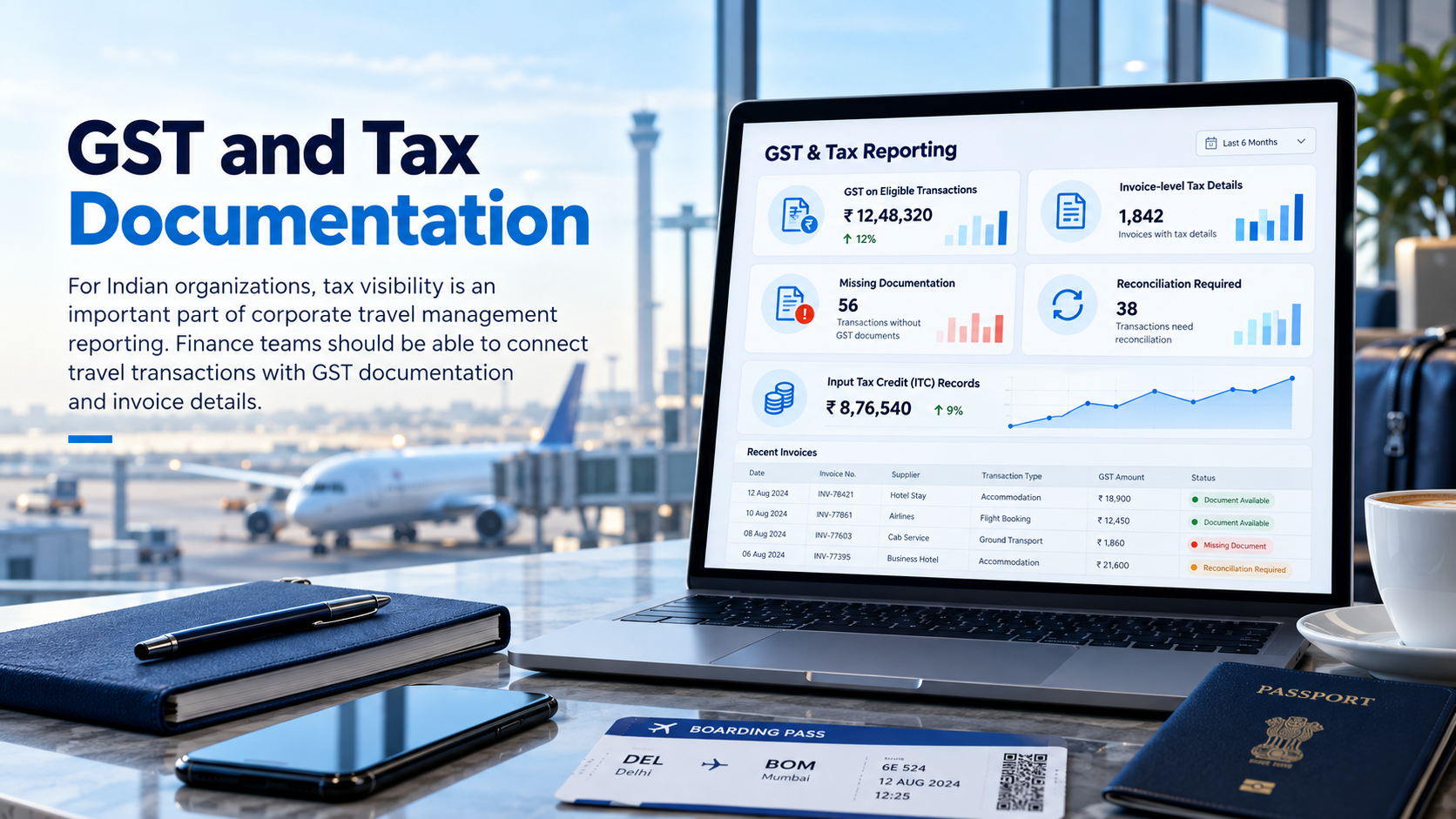 For Indian organizations, GST visibility is an important part of corporate travel reporting. Finance teams should be able to connect travel transactions with the relevant invoices and GST documentation, making reconciliation and eligible input tax credit tracking easier.
The reporting process should facilitate the identification of:
We want to give finance teams cleaner, more traceable documentation versus having to reverse engineer travel transactions later on.
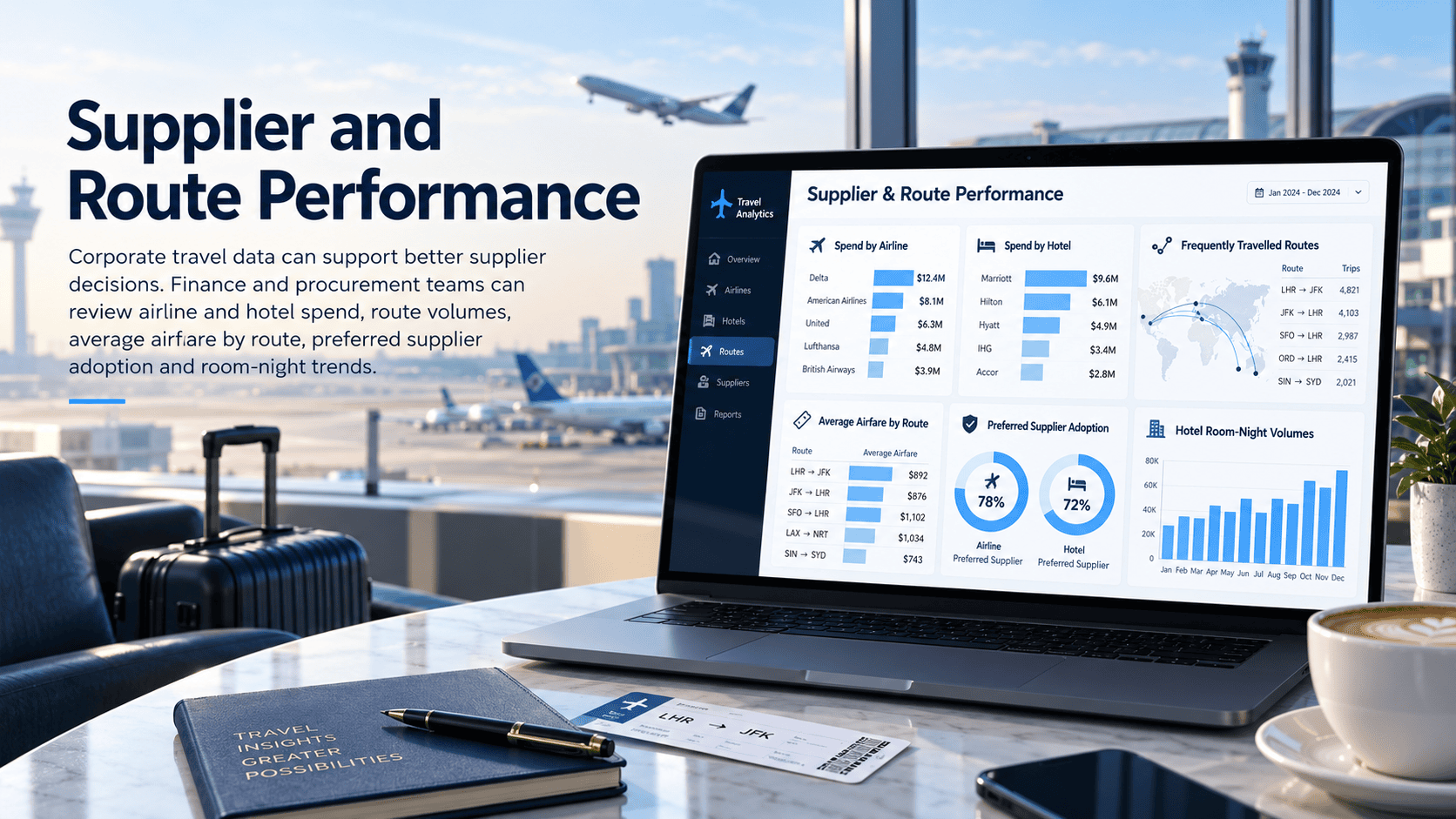 Corporate travel management data can also be leveraged to improve supplier decisions.
CFOs and procurement teams can examine:
This provides organizations with improved data to assess preferred supplier programs, negotiated rates, and future commercial agreements.
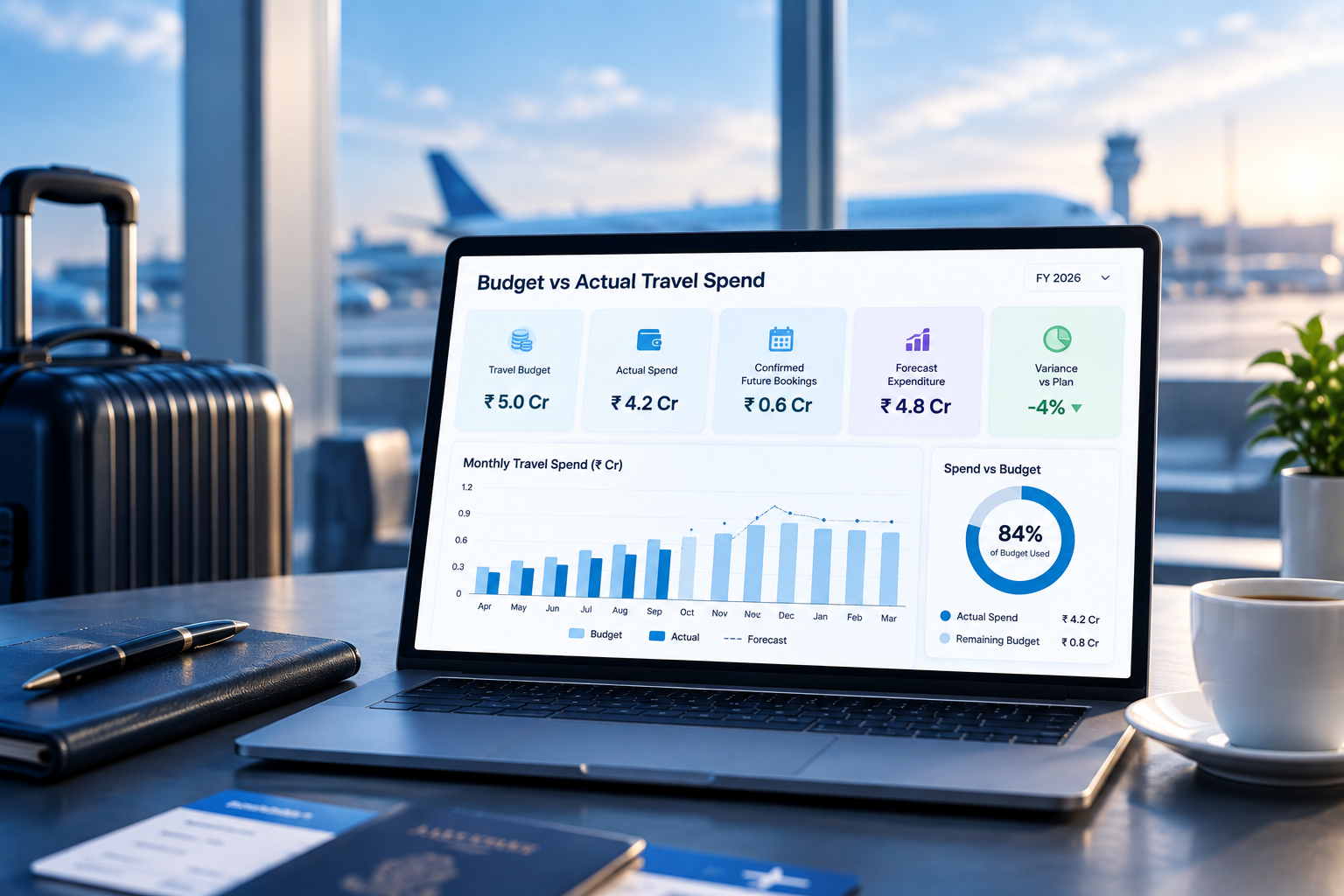 One of the simplest and therefore most useful views in finance is
How does real corporate travel spend compare to the approved budget?
Ideally, reporting for corporate travel management should offer visibility into:
This empowers finance teams to identify potential overspends sooner rather than after the reporting period is over.
A corporate travel management report shouldn’t be just a simple spreadsheet handed out at the end of every month.
It should answer three questions:
What occurred?
Why did it happen?
What do we look at next?
If one department always books last minute, the problem may be in the approval process.
If hotel costs on a given route increase substantially, preferred rates may need to be reviewed.
If employees frequently book outside policy, the booking workflow or the policy structure may need to be addressed.
This is where the reporting of corporate travel management becomes more than data collection but rather actionable business intelligence.
A corporate travel management company should provide more than reservation support.
Finance teams should expect clear and consolidated reporting that helps them understand:
At Gilpin Travel Management, reporting is part of a wider managed corporate travel programme. By bringing air, hotel, visa, forex, ground transport, and other travel requirements under one accountable partner, businesses can gain a more consolidated view of travel activity, improve policy compliance, and make more informed decisions around cost and supplier management.
Because effective corporate travel management is not simply about making bookings.
It is about giving decision-makers greater visibility into how, where, and why the organization’s travel budget is being used.


Looks like you’ve been inactive for a while.
Discover more about Gilpin Travel Management and explore our services today!
Gilpin — a trusted corporate travel partner for over 25 years, offering compliant, cost-efficient, innovative, customized, technology-driven, and sustainable corporate travel experiences across India and worldwide.


