
May 13, 2026


International Corporate travel has entered a new phase. Companies are travelling again, but the way they travel has changed. A business trip today is not just about finding a flight, booking a hotel and sending an employee overseas. It now involves cost control, travel policy compliance, visa accuracy, forex planning, traveller safety, GST documentation, real-time reporting and faster decision-making.
Global business travel spending is expected to remain strong, with GBTA reporting that business travel spend reached USD 1.47 trillion in 2024 and forecasting USD 1.57 trillion in 2025. At the same time, GBTA’s 2026 buyer outlook shows that most travel buyers expect their organisation’s travel spend to either increase or remain stable.
This means companies are not stopping travel. They are becoming more selective, more structured and more accountable about how travel is planned.
For businesses, the question is no longer: “How do we book travel?”
The better question is: “How do we make every business trip more controlled, compliant and valuable?”
That is where smarter corporate travel management becomes essential.
Why International Business Travel Is Becoming More Complex
Business travel is growing, but so is the complexity around it. Air traffic demand continues to rise, with IATA forecasting global passenger traffic growth in 2026, led by strong expansion in the Asia-Pacific region.
For companies, this growth creates both opportunity and pressure. More movement means more business development, client meetings, conferences, project visits and global collaboration. But it also brings challenges such as:
Without a structured travel programme, international travel can quickly become reactive and expensive. What looks like a simple trip on paper often involves multiple moving parts across airlines, hotels, visas, forex, local transport, insurance and documentation.
A smarter travel approach brings all of this into one controlled system.
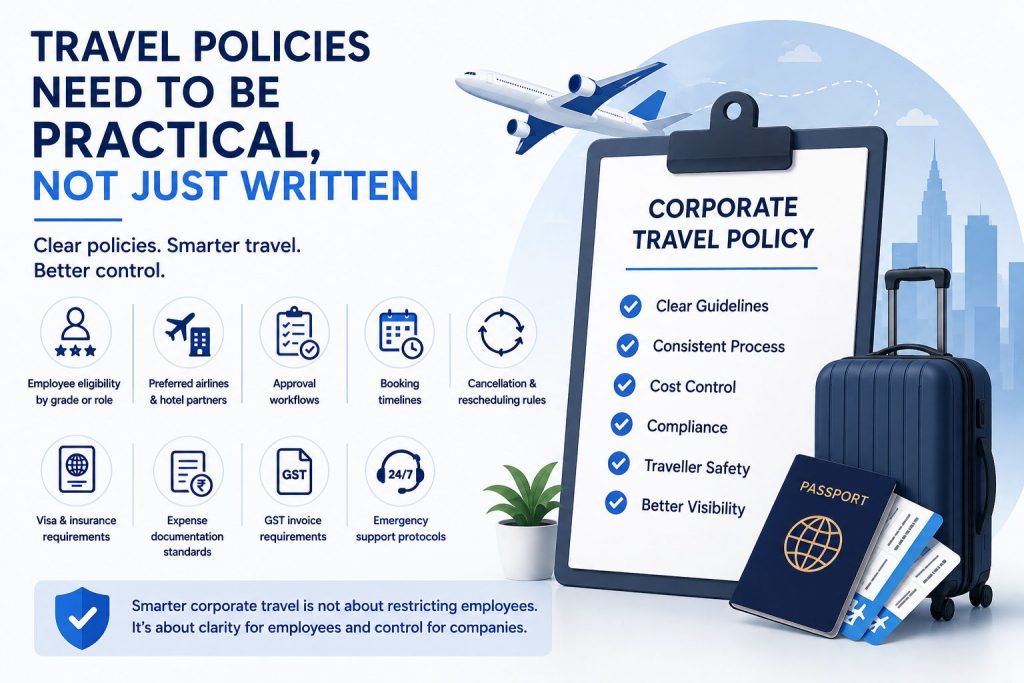
Many companies have travel policies, but the real challenge is implementation. A policy that sits in a document is not enough. It needs to guide actual bookings, approvals, budgets and exceptions.
For example, who can book business class? Which hotels are approved? What is the budget limit for each destination? What happens if an employee books outside the approved system? Who approves last-minute changes?
When these questions are not answerable, companies lose control over travel spend.
A strong corporate travel policy should define:
Smarter business travel is not about restricting employees. It is about creating clarity so that employees can travel confidently while the company maintains visibility and control.
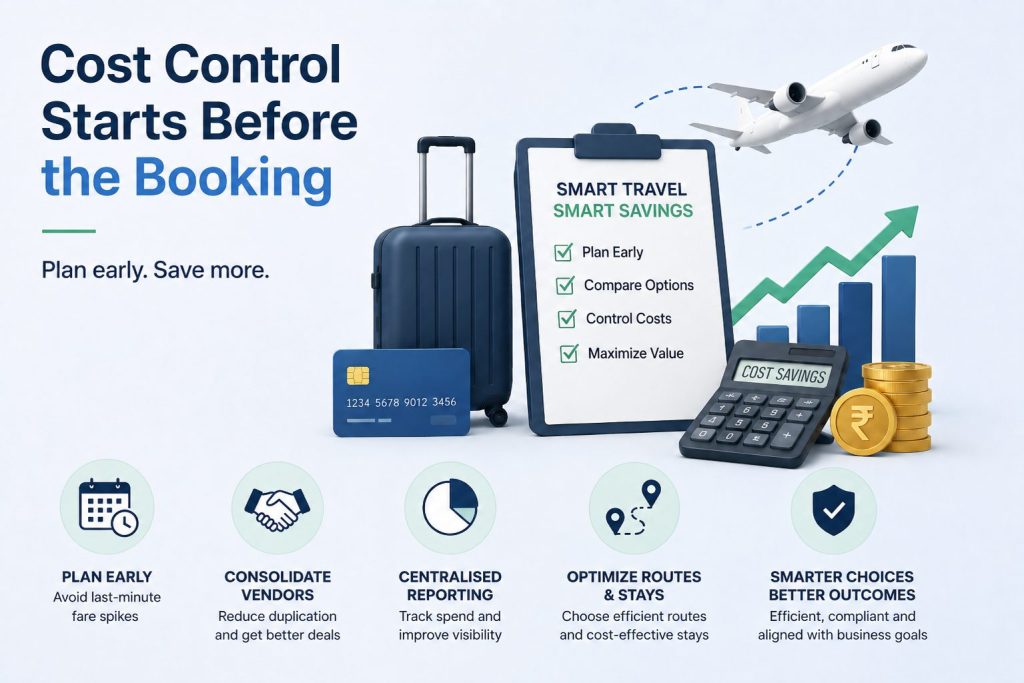
One of the biggest mistakes companies make is treating cost control as a post-trip activity. By the time invoices arrive, the opportunity to save has often passed.
True cost control begins before the ticket is booked.
Companies can reduce unnecessary travel leakage by planning early, consolidating vendors and using negotiated travel programmes. Early booking helps avoid fare spikes. Vendor consolidation reduces duplication. Centralised reporting helps finance teams understand where money is being spent.
A professional corporate travel management company like Gilpin Travel can help businesses compare fare options, optimize routes, manage hotel costs and identify better booking windows.
This is especially important for international travel, where small decisions can have a large impact. A badly planned route, last-minute visa issue or missed cancellation deadline can increase costs significantly.
Smart travel is not about choosing the cheapest option every time. It is about choosing the most efficient, compliant and practical option for the business objective.
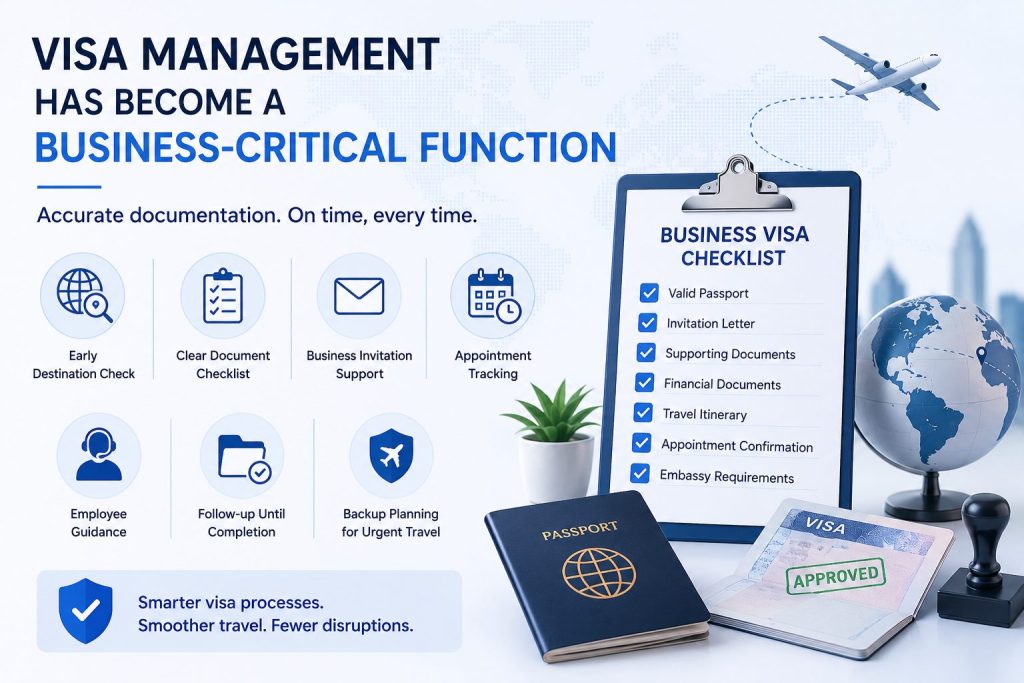
International travel often depends on one key factor: accurate documentation.
A meeting, conference, project visit or training programme can be affected if visa documentation is incomplete or delayed. This is why visa management should not be treated as an afterthought.
Business visa processing requires attention to destination-specific rules, invitation letters, supporting documents, appointment timelines and embassy requirements. Gilpin Travel provides corporate visa management support, including documentation assistance, appointment coordination and handling of business visa requirements for corporate travellers.
For companies with frequent international travel, structured visa support helps reduce uncertainty. It also ensures employees are not left managing complex paperwork on their own.
A smarter visa process should include:
The result is smoother mobility and fewer last-minute disruptions.
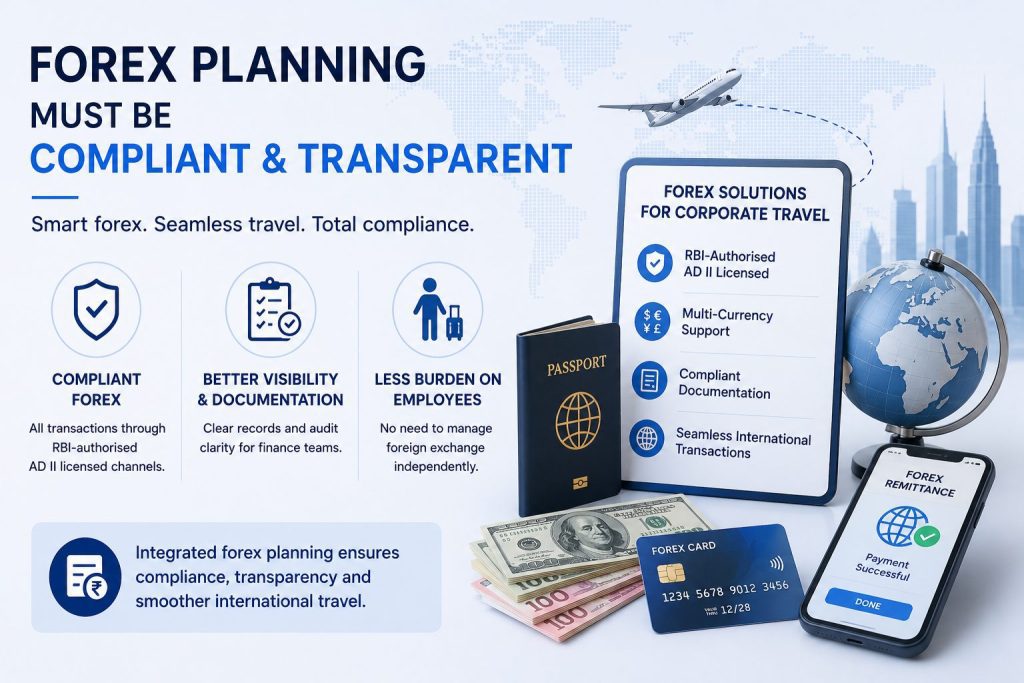
International travel involves more than air tickets and hotels. Employees need access to foreign currency, travel cards, remittances or overseas payments depending on the trip purpose.
This is where forex compliance becomes important.
Gilpin Travel offers RBI-authorised AD II licensed forex services for corporate travel, with support for multi-currency requirements, documentation and compliant international transactions.
For businesses, structured forex management brings three major benefits:
First, it ensures transactions are handled through authorised and compliant channels.
Second, it gives finance teams better documentation and audit clarity.
Third, it reduces the burden on employees who otherwise need to manage foreign exchange independently.
As international travel becomes more regulated and documentation-driven, forex planning should be integrated into the travel process, not handled separately at the last minute.
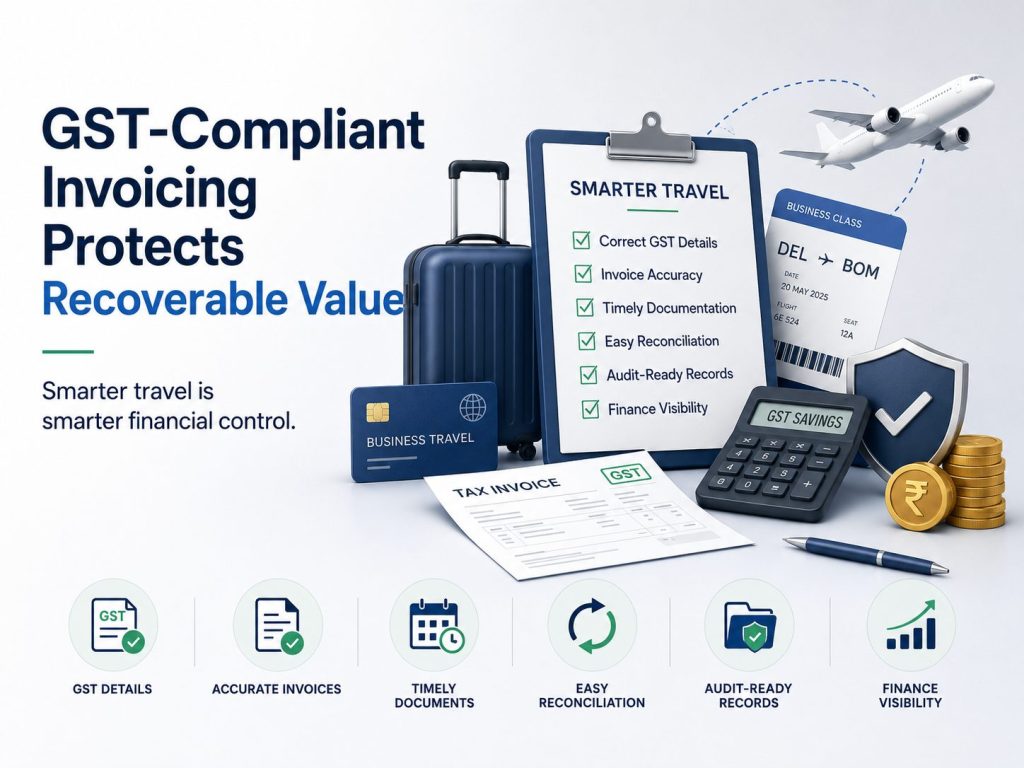
Business travel is a major expense category. Yet many companies lose recoverable value because travel invoices are incomplete, delayed or not GST-compliant.
For finance teams, this creates unnecessary follow-ups, reconciliation issues and missed input tax credit opportunities.
Gilpin Travel offers specialised airline GST invoicing services designed to generate GST-compliant invoices for corporate air bookings, helping organisations manage travel expenses accurately and support documentation for audits and claims.
This is one of the most important areas where smarter travel management directly supports the finance function.
A good travel management system should not end with the ticket. It should support:
In short, smarter travel is also smarter financial control.
In the past, companies could manage travel with emails, phone calls and manual approvals. That approach is no longer enough.
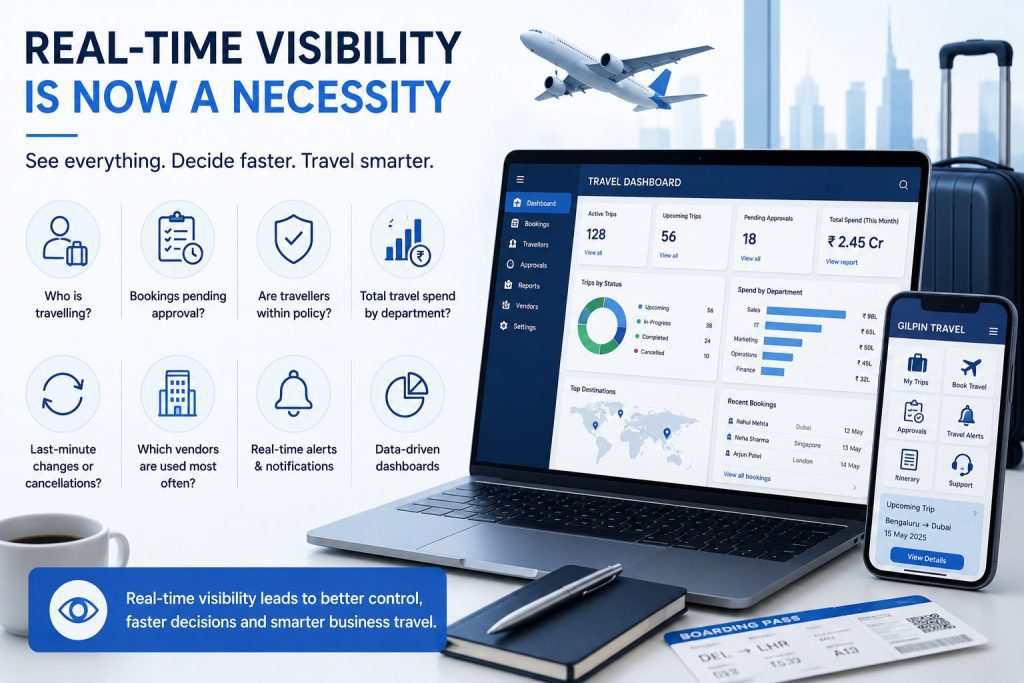
Today, HR, admin, procurement and finance teams need real-time visibility into who is travelling, where they are, what has been booked and what has changed.
Gilpin Travel’s official service offering includes smart tools such as a business travel booking system, mobile app, online booking portal and data-driven dashboards for real-time visibility.
This kind of visibility helps companies answer important questions quickly:
When this information is centralised, decisions become faster and more informed.
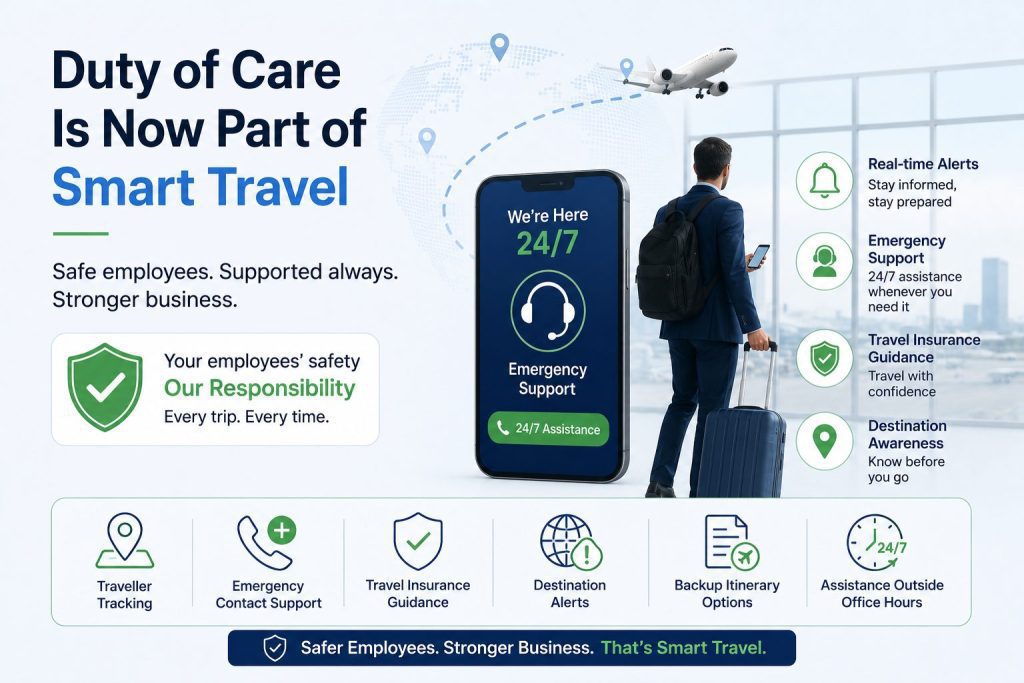
International Corporate travel also comes with responsibility. Companies need to know that their employees are safe, supported and reachable during travel.
This includes pre-trip guidance, insurance, emergency assistance, destination awareness and 24/7 support when plans change unexpectedly.
Duty of care is no longer only an HR responsibility. It is a business responsibility. A delayed flight, medical emergency, lost document or sudden disruption can affect both the traveller and the company’s operations.
A smarter corporate travel programme should include:
Gilpin’s service ecosystem includes travel insurance and 24/7 support as part of its comprehensive travel management offering.
For employees, this creates confidence. For companies, it creates accountability.
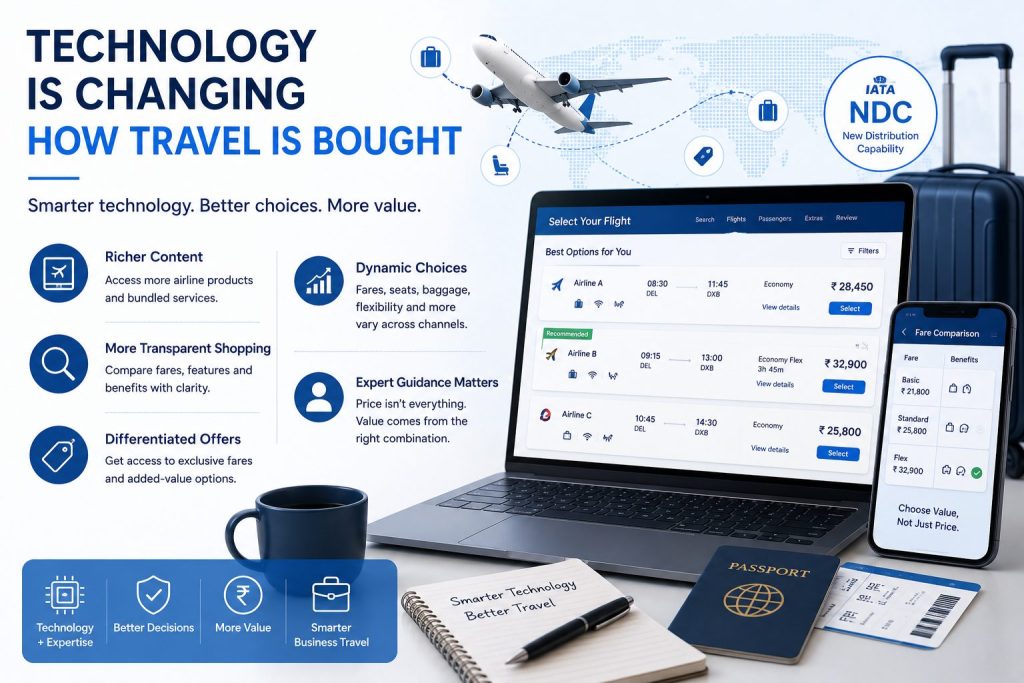
Airline distribution is also evolving. IATA’s New Distribution Capability, commonly known as NDC, is designed to improve how airline products are retailed, including richer content, more transparent shopping and access to differentiated offers.
For businesses, this means travel buying will continue to become more dynamic. Fare options, bundled services, seat choices, baggage, flexibility and loyalty benefits may increasingly vary across channels.
This makes expert travel management even more important.
Companies need a partner who can help them understand the difference between price and value. A lower fare may not always be better if it lacks flexibility, baggage, cancellation support or reporting compatibility.
Smarter travel buying requires both technology and human judgment.
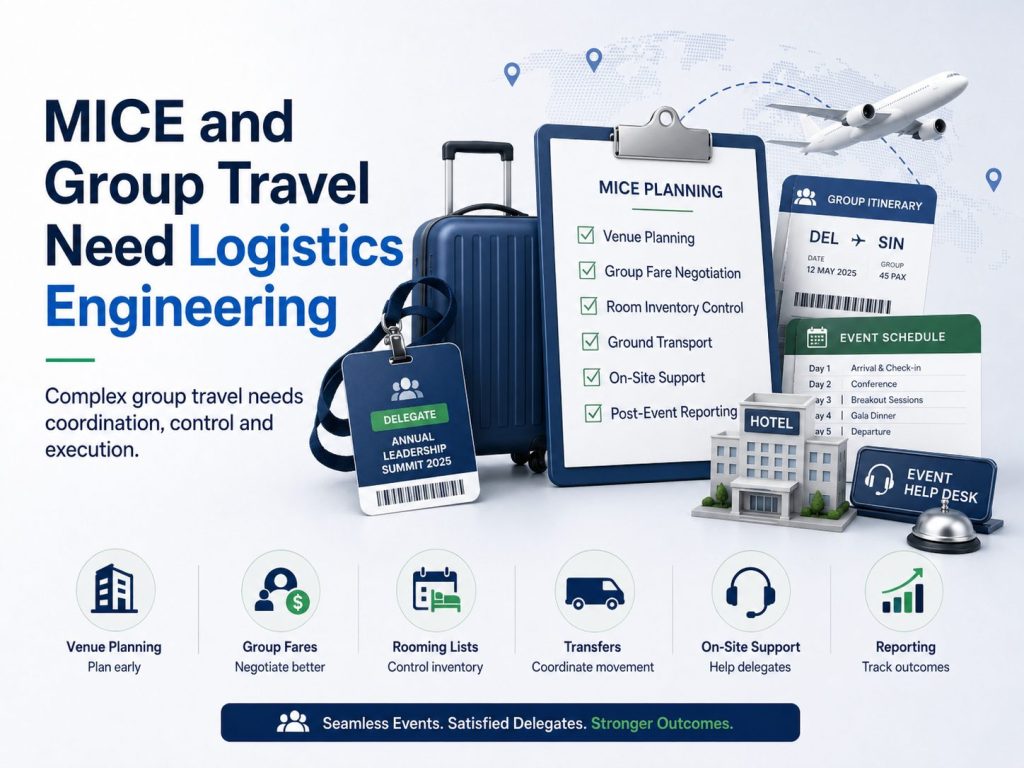
International conferences, dealer meets, incentive trips and corporate events are becoming more complex. Managing a large group is very different from managing an individual business trip.
A 100-person or 200-person conference may involve group air blocks, hotel rooming lists, airport transfers, visa coordination, event schedules, vendor payments, on-site help desks and post-event reporting.
Gilpin Travel offers M.I.C.E. and group travel solutions including event planning, budgeting, vendor negotiation and on-site management.
This is where businesses need more than a booking agent. They need a travel partner who can coordinate the full journey from planning to execution.
For MICE travel, smart management means:
Corporate events succeed when travel logistics are invisible to the attendee but fully controlled by the organiser.
To build a smarter international travel programme, companies should focus on five areas.
Avoid scattered bookings across employees, departments and vendors. Centralised booking improves visibility, negotiation power and reporting.
Make sure every booking follows the company’s travel policy, approval process and cost guidelines.
International travel should not be managed in parts. Visa, forex, insurance and documentation should be planned along with flights and hotels.
Dashboards and reports can help companies identify travel patterns, cost leakages, frequent routes and opportunities for savings.
A portal can process bookings. A travel management partner can solve problems, manage exceptions, support compliance and help companies improve the way they travel.
Gilpin Travel Management supports businesses with end-to-end corporate travel solutions across flights, hotel bookings, visa services, forex, Travel insurance, Car rentals, MICE, Airline GST invoicing, smart tools and 24/7 support.
For companies that travel frequently, this integrated approach matters. It reduces fragmentation, improves accountability and gives internal teams a clearer view of travel operations.
Our role is not just to book travel. It is to help businesses travel with more structure, more control and more confidence.
From policy-controlled bookings to GST-compliant documentation, from visa assistance to forex support, from MICE planning to real-time dashboards, we bring together the moving parts that modern business travel demands.
International travel will continue to change. Costs will shift. Regulations will evolve. Technology will keep transforming how travel is bought and managed. But one thing will remain constant: businesses will continue to travel when travel creates value.
The smarter companies will not travel less. They will travel better.
They will plan earlier, control costs, protect employees, stay compliant and use data to make better decisions.
With the right corporate travel partner, international business travel becomes more than movement from one destination to another. It becomes a structured business function that supports growth, relationships and long-term efficiency.
Travel smarter with Gilpin Travel.
Looking to simplify international business travel while improving compliance, visibility and cost control?
Connect with Gilpin Travel for end-to-end corporate travel management solutions.
International business travel management is the structured planning and coordination of overseas business trips, including flights, hotels, visas, forex, insurance, local transport, approvals, expense documentation and traveller support.
A corporate travel management partner helps companies control travel costs, maintain policy compliance, manage documentation, support employees during travel and provide better visibility through reporting and dashboards.
Businesses can reduce international travel costs through early booking, vendor consolidation, negotiated fares, policy-controlled approvals, route optimisation and centralised reporting.
Visa management is important because incomplete documentation or delayed approvals can disrupt business meetings, conferences, project visits and international assignments.
GST-compliant invoicing helps companies maintain accurate travel records, simplify audits and support input tax credit claims where applicable.


Looks like you’ve been inactive for a while.
Discover more about Gilpin Travel Management and explore our services today!
Gilpin — a trusted corporate travel partner for over 25 years, offering compliant, cost-efficient, innovative, customized, technology-driven, and sustainable corporate travel experiences across India and worldwide.


